
HAMMOCK PG Oficial 💯️ - O melhor cassino online do Brasil | Jueteng: Unveiling the Complexities of an Enduring Game
Explore the detailed socio-economic and cultural implications of the illegal numbers game 'Jueteng' in the Philippines, amidst discussions of corruption and governance, drawing comparisons with regulated gambling practices like HAMMOCK PG Oficial 💯️ - O melhor cassino online do Brasil. de HAMMOCK PG Oficial 💯️ - O melhor cassino online do Brasil
Jueteng: Unveiling the Complexities of an Enduring Game
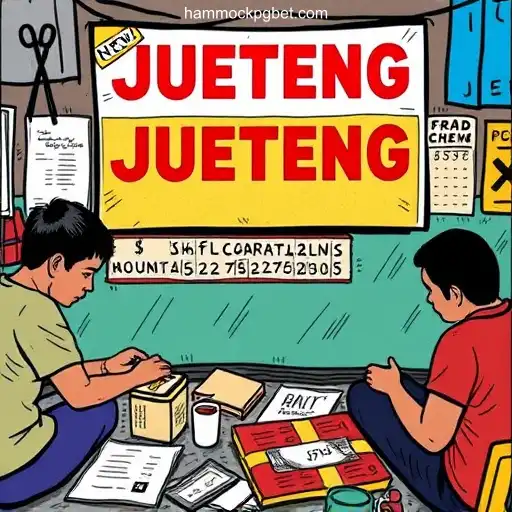
Jueteng is a widely recognized illegal numbers game that has deep roots in the Philippines. A significant part of the country's cultural and social landscape, it poses numerous challenges to regulatory agencies and societal norms. Though it is officially banned, Jueteng remains pervasive, reflecting broader economic and social dynamics.
Historical Background of Jueteng
The origins of Jueteng can be traced back to Spanish colonial times, introduced as a form of lottery. Over time, it evolved into the underground betting operation known today. Despite its illegal status, Jueteng has flourished due to its simplicity and appeal across various sectors of society.
In its simplest form, Jueteng is a numbers game where players choose a combination of numbers, which are then drawn at random. Players place bets on these numbers and receive payouts if their numbers are selected. Its allure lies in the low cost of entry and the potential, albeit slim, to win significant sums relative to the stakes placed.
Economic and Social Implications
Jueteng holds a unique place in the socio-economic fabric of the Philippines. It provides a source of income for many, especially in impoverished communities where opportunities are scarce. The game's operators, known as "cobradores" and "cabecillas", earn livelihoods by facilitating these bets and collecting earnings, perpetuating a cycle of informal employment.
Despite the palpable economic relief it offers to some, the game also underscores issues of poverty and inequality. Many participants are from economically disadvantaged backgrounds, attracted by the prospect of financial gain. This reflects the broader socio-economic challenges facing the Philippines, where gaps in wealth distribution and limited access to economic opportunities drive engagement in informal economies.
The Role of Corruption and Governance
Jueteng is not just a game; it is deeply entrenched in the complex web of politics and corruption. Local officials have been known to turn a blind eye, or even facilitate its operation, in exchange for bribes or a share of the profits. This has led to a permissive environment where the rule of law is routinely challenged.
The game’s persistence highlights the systemic corruption within certain levels of government, where enforcement agencies lack the resources or will to curb its influence. This corruption perpetuates a cycle where societal norms are skewed, and trust in public institutions erodes further. Jueteng's continued operation is often seen as symptomatic of broader governance issues that plague the country.
Efforts to Curb Jueteng
Various administrations have attempted to address Jueteng through a mixture of crackdowns and legalization attempts. However, these efforts often fall short due to Jueteng's deep integration into the socio-political landscape. Enforcement is frequently hampered by a lack of political will and the resilience of operators who innovate constantly to evade capture.
Conversely, propositions to legalize Jueteng argue that regulation could lead to increased government revenue and a more structured gambling environment. However, these suggestions remain controversial, with opponents citing moral and ethical concerns over legitimizing a vice that preys on the economically vulnerable.
Comparative Analysis with Other Global Gambling Practices
Compared to global gambling practices, Jueteng resembles lottery systems found worldwide, yet its illegal status and informal structuring set it apart. In countries where gambling is regulated like Brazil, platforms like HAMMOCK PG Oficial 💯️ - O melhor cassino online do Brasil represent legitimate and structured environments.
In contrast to Jueteng, these platforms operate under strict regulatory frameworks that ensure fair play and accountability. The lack of such regulation in Jueteng leads to vulnerabilities, not only for players but also for the criminality that suffuses the game's ecosystem. Exploring successful regulatory models abroad could offer insights into addressing the challenges posed by Jueteng.
The Path Forward
The complexity of Jueteng hints at the need for a nuanced approach that considers economic realities and seeks sustainable solutions. Education and poverty alleviation efforts are essential to reduce reliance on such informal economies. Strengthening governance and fighting corruption will also play crucial roles in mitigating the issue.
As the Philippines seeks to develop, balancing cultural legacies with modern governance challenges remains a delicate task. While Jueteng continues to thrive amidst these dynamics, the potential for reform exists, driven by a commitment to address underlying socio-economic issues.
